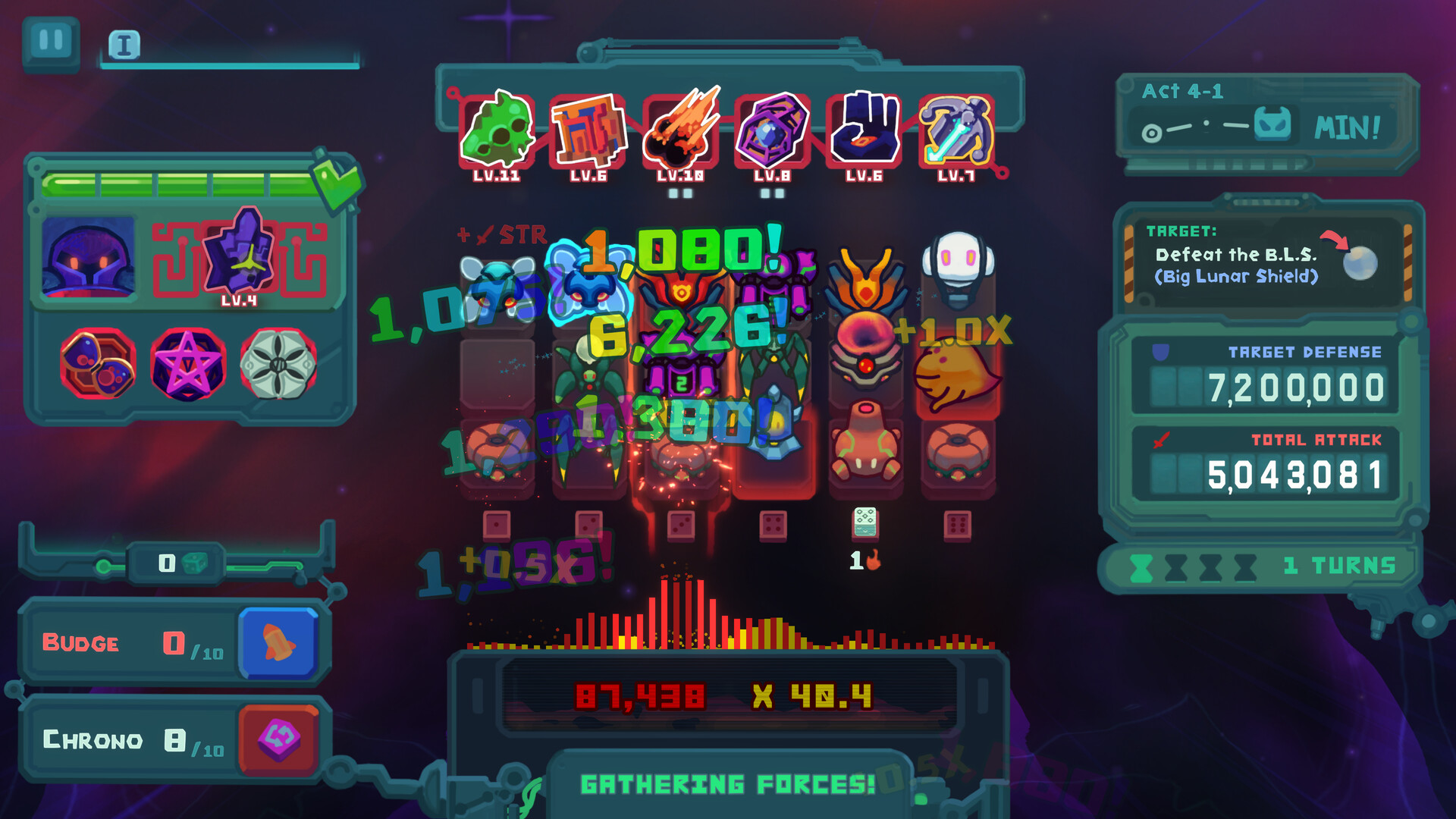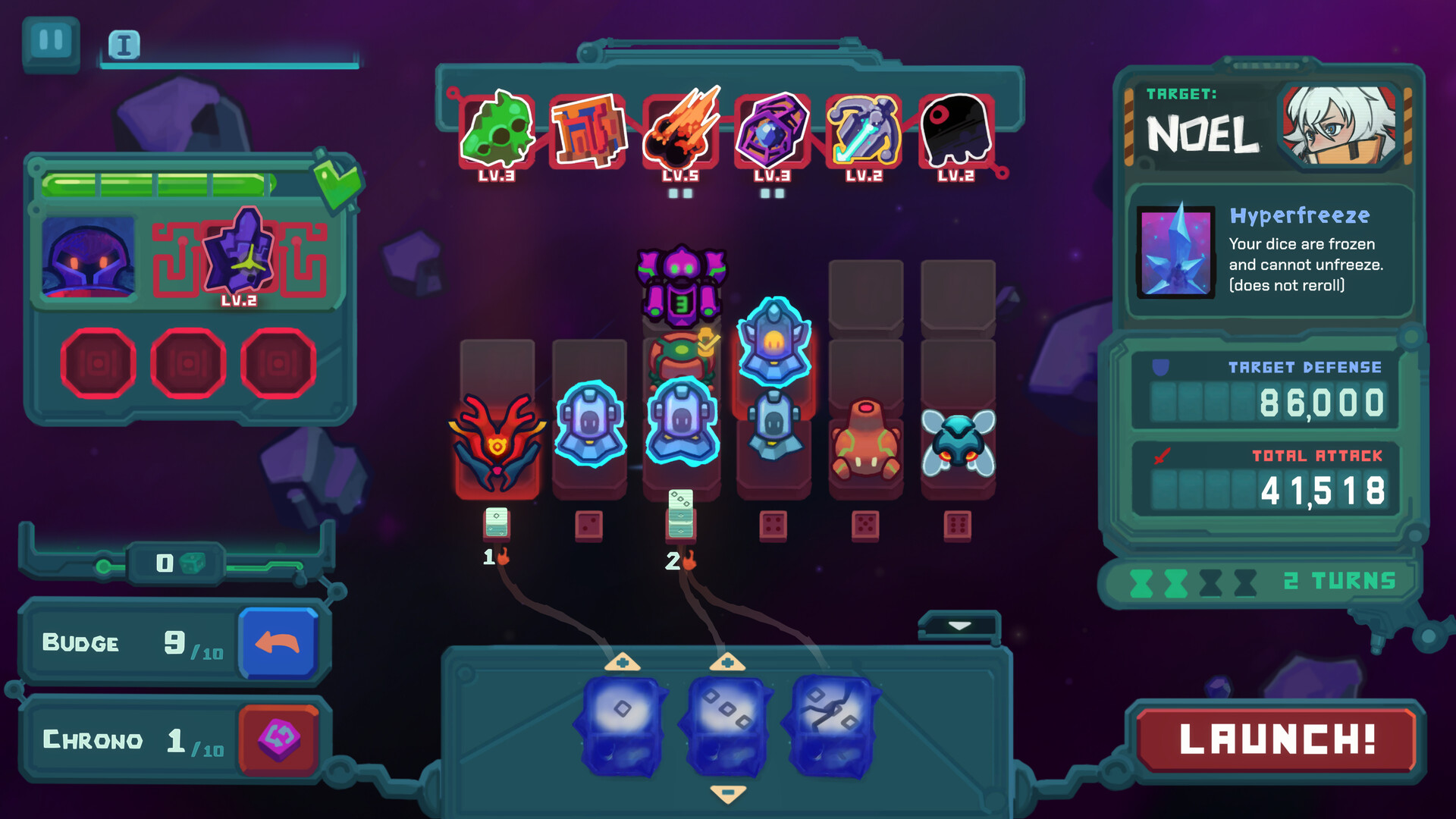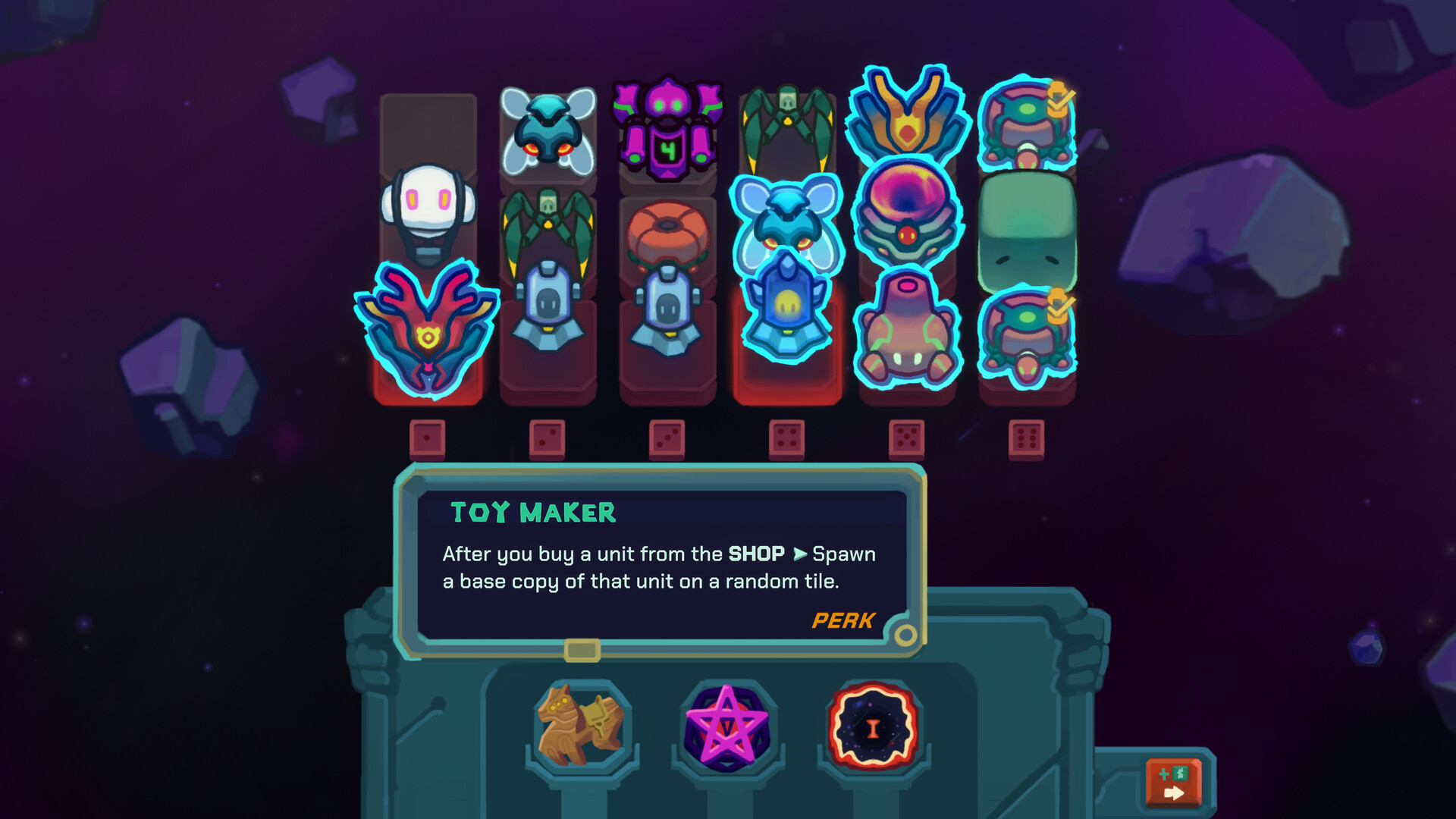
Read the trigger before the reward
An artifact with a large reward can occupy a slot without helping if the army rarely satisfies its condition. Read the event first: a pair in its own column, a Base Dice score, a unit death, a spawn, a level-up or the start of a turn. Then ask how often your present board produces that event and what changes would be required to produce it more often.
The official launch announcement lists 120 artifacts in the full game. This guide focuses on the featured ordinary commander artifacts and the decisions they illustrate. It is a curated reference, not a complete claim that every level, Astral variant and interaction is documented here. The in-game tooltip shows the amount for the item you are buying, which can differ from an ordinary launch spotlight.
Give an artifact one immediate job
Think of purchases as access, growth, scoring, Mult or economy. An access effect lets you reach a useful activation. Growth raises future output. Extra scoring uses the valuable units again. Mult amplifies the turn, and economy buys the next improvement. An item can perform several jobs, but you should be able to identify the first one it will perform after purchase.
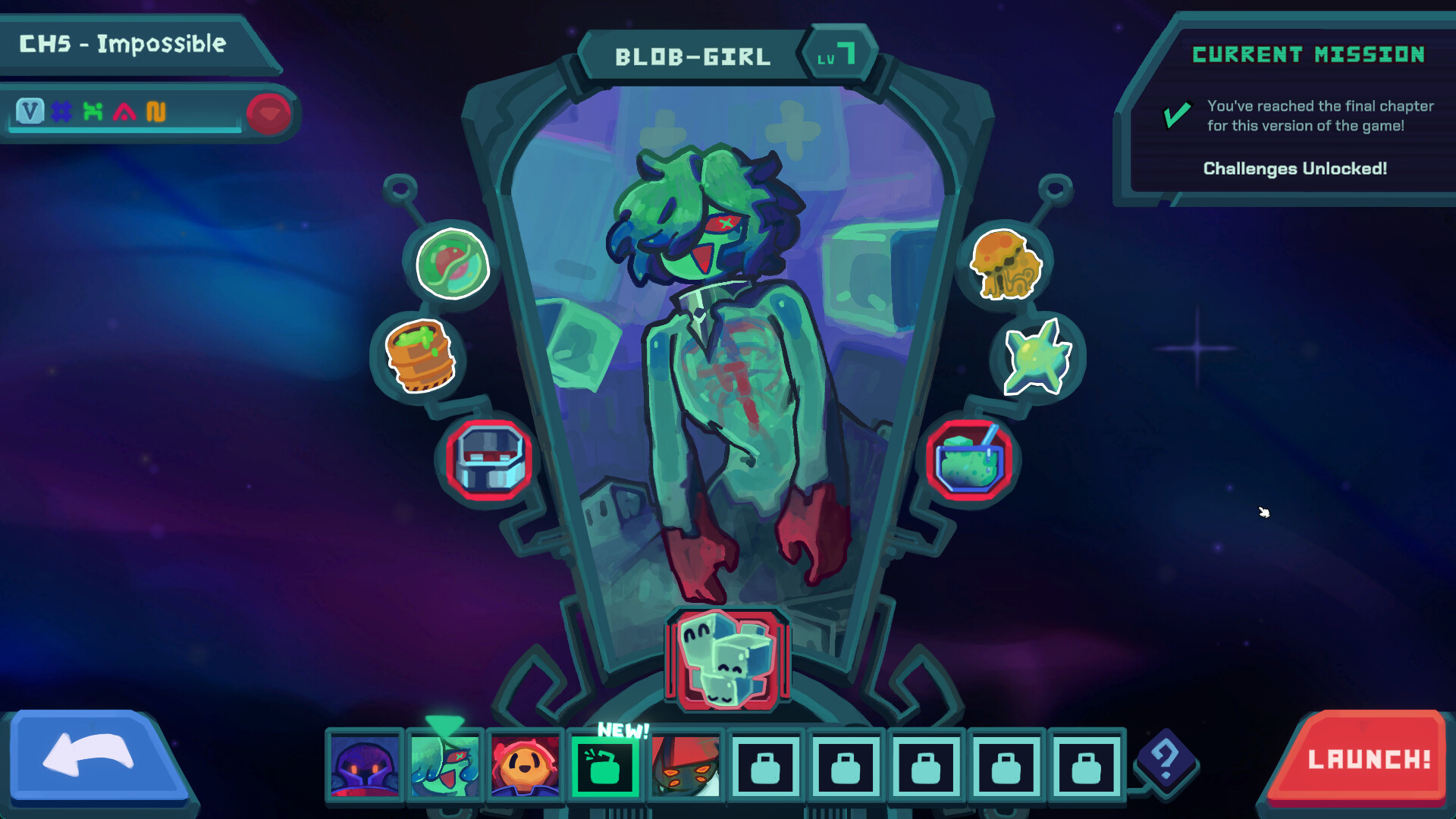
For example, Captain supplies recurring Budge and pair XP. A pair-triggered artifact in a useful column can use that starting kit immediately. Blob Girl provides Mini-Dice and column XP, so an effect that responds to those dice has a natural source of activations. Blood Beast supplies artifact XP from non-Token deaths; a death-based plan also needs units to replace the ones it consumes. The same artifact can be easy to support on one board and awkward on another.
Compare an immediate payoff with a speculative ceiling. A powerful artifact that requires three additional specific purchases may not help you survive the next target. A modest effect already linked to the board can buy time to find a better one. Once that stronger offer is affordable and supported, replacing the old item is a useful pivot rather than wasted progress.
Featured growth and scoring artifacts
These are ordinary effects from the official commander spotlights. Values and timing on your current item take priority, especially after leveling or acquiring a variant.
| Artifact | Starting effect or role | How to evaluate it |
|---|---|---|
 Rocket Ship Rocket Ship | Budge-linked random unit bonus of 15 STR | Check the current tooltip; published trigger descriptions differ |
 Spiky Gel Spiky Gel | Received Mini-Die gives a random unit 5 STR | Count recurring dice income and the recipient pool |
 Acid Town Acid Town | Mini-Dice scoring here scores a unit in another column | Keep worthwhile targets outside its column |
 Oozone Oozone | Adds Mini-Dice power in its column | Put meaningful Mini-Dice scores there |
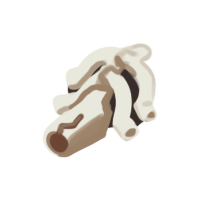 Dread Knot Dread Knot | A quadruple gives all units 150 STR | Price how reliably the kit can make the match |
 Cavities Cavities | Units scored during Kraken Base Dice gain 25 STR | Use a column the special die reaches |
 Mycelium Mycelium | After Base Dice, three random units gain Charge and STR | Keep useful recipients for the random bonus |
 Lone Dragon Lone Dragon | Kraken alone in its column has two extra Dice Power | Compare isolation with the value of a match |
 Big Apple Big Apple | Turn start gives Apples 100 STR | Keep the Apple loop useful rather than just large |
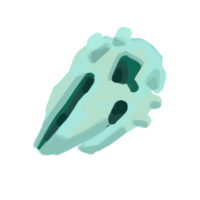 Whalefall Whalefall | Passes 20% of a destroyed unit's STR to a random unit | Preserve meaningful recipients through the death |
 Stone Chisel Stone Chisel | Supports Pawn strength and spawn payoffs | Buy into actual Pawn access, not a hoped-for shop |
 Fortress Fortress | Non-Token spawn builds a tile and strengthens a random unit | Make sure new space and units have a scoring role |
 Dark Tower Dark Tower | A triple gives Repeat to the highest-STR unit | Ensure that unit is also worth scoring repeatedly |
 Golden Halo Golden Halo | Adds one to adjacent artifacts' scaling numbers | Evaluate both neighbors before assigning its slot |
 Galactic Web Galactic Web | Web spawning and scores provide artifact XP | Keep the generated units and XP route usable |
 Meat Stick Meat Stick | Column score gives all units STR equal to Dice Power × 10 | Improve productive column access and power |
 Blood Clot Blood Clot | Turn start spawns a Hemocyte with 30 extra STR | Plan space and the spawned unit's role |
The practical distinction is whether the artifact's payoff follows a common action or requires a rare arrangement. Received resources, turn starts and ordinary column scores can be frequent, but frequency is specific to the army. A quadruple artifact can be excellent in a kit that creates extra matching dice and almost inactive in another run.
Featured economy, control and Mult artifacts
| Artifact | Starting effect or role | Important boundary |
|---|---|---|
 Bunker Bunker | Turn-start Mult tied to stored Budge | Spending the stockpile changes the reward |
 Wings of Fury Wings of Fury | Pair gives column Mult; Budge can level its artifact | Balance present control against level value |
 Rib Cannon Rib Cannon | Kraken Base Dice score gives Budge and Mult | Ordinary Mini-Dice do not replace the named trigger |
 Eon Moss Eon Moss | Spent Chrono gives Mult and temporary shop rarity | A refresh still needs a reason and buying power |
 Cyclotron Cyclotron | Base Die rolling this column rerolls and supplies Budge and Mini-Dice | Read the roll event separately from a score |
 Mass Relay Mass Relay | Base Dice here reroll into Rifts; triple Rift scores random units | Build an affordable route to the required match |
 Timeblock Timeblock | Rift roll supplies a shield and unit strength | A useful recipient matters |
 Parasite Parasite | Death in its column provides Mini-Dice and Mult | Destroy the unit where the effect can see it |
 Rat Poison Rat Poison | A pair lets Token scoring gain Repeat | The unit type and match both matter |
 En Passant En Passant | Non-Token death supplies Chrono and Mini-Dice | Replacements must justify the consumed unit |
 Blitz Armor Blitz Armor | Shield break supplies Budge and Mult | Shield supply is part of the engine |
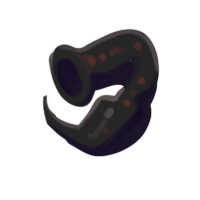 Flying Stinger Flying Stinger | Last Honey in a column gives money and army STR | Track the remaining Honey |
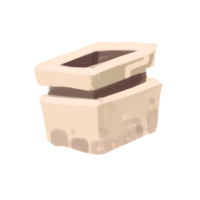 Flower Pot Flower Pot | Triples respawn Honey and add temporary rarity | The collection loop needs the respawn event |
 Hot Buzz Hot Buzz | Honey collection gives Charge and Mult | Collection access makes the payoff repeatable |
 Sugar Cube Sugar Cube | Honey collection improves Base Dice power in that column | Aim the follow-up score where power increased |
 Rage Virus Rage Virus | Base Dice score gives Mult; BEAST MODE adds multiplication | The mode and die type change the outcome |
 Lizard Tail Lizard Tail | Absorbs a Heart loss once, with Rage and Mini-Dice | This is consumed protection, not permanent immunity |
 Torpedo Torpedo | Budge wraps 6↔1; received Budge scores random units | Use the wrap only when the artifact is present |
 Red Spice Red Spice | Turn end reduces the left artifact's level to multiply Mult | Keep an eligible artifact to its left |
A resource effect is valuable when it feeds another useful action. Extra Chrono can buy more shop options or repair a roll; extra Budge can reach a match; more cash can buy a needed replacement. If the chain stops at an unused stockpile, look at the missing use rather than buy another income item automatically.
XP engines need eligible recipients
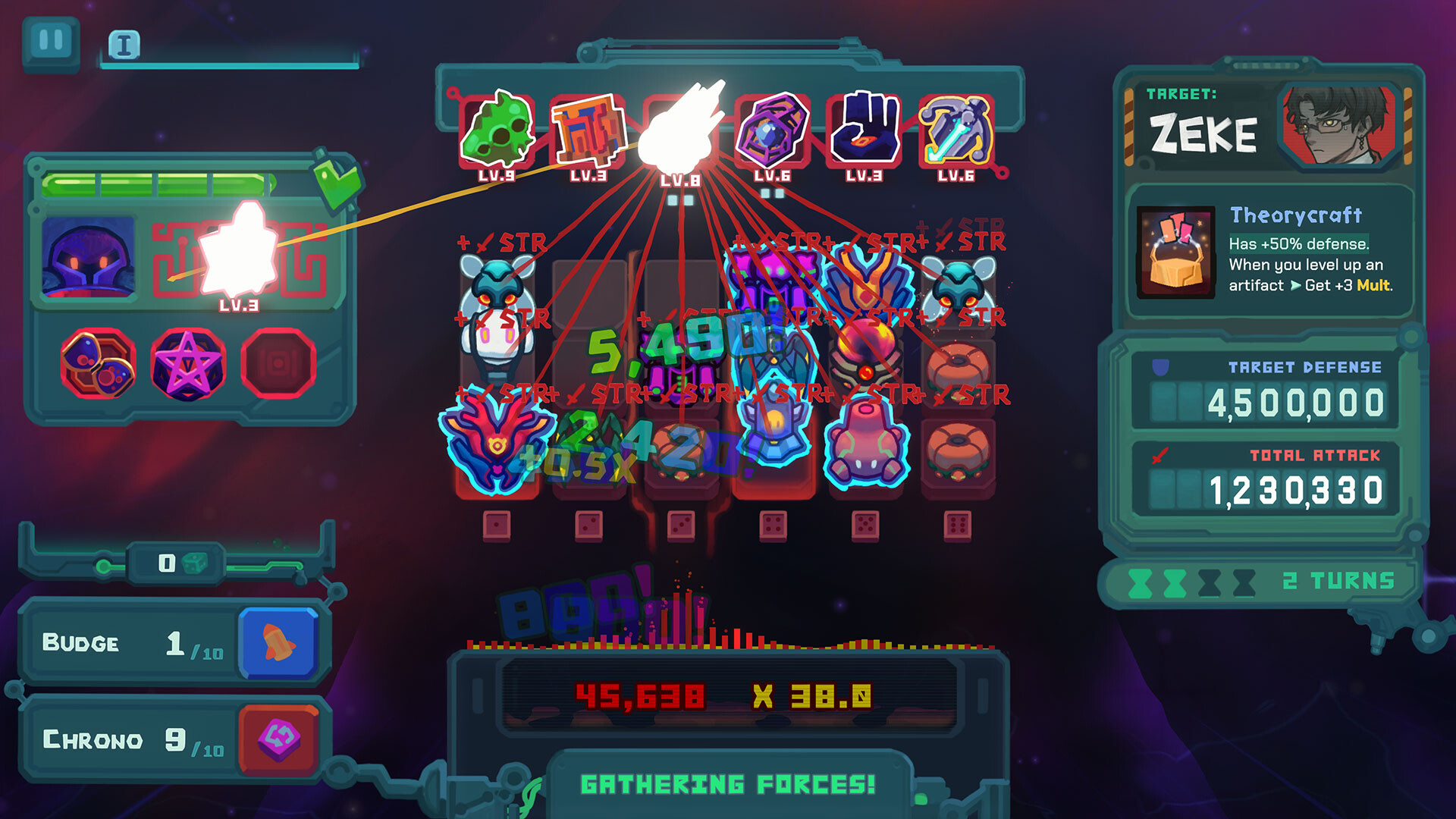
Commander perks supply several different XP routes. Captain grows the artifact beneath a pair, Blob Girl grows columns reached by Mini-Dice and Blood Beast grows every artifact from non-Token deaths. Choose a route the board naturally produces. Raising the level of an artifact you cannot activate does not resolve that access problem.
The Exalted's Divine Touch adds level-up triggers within a stated level boundary, while Dark Medal extends that boundary. This makes the current level part of the decision. Read whether the next XP purchase provides both a stronger item and an immediate trigger, or only the first. A threshold interaction is not a universal rule that all artifact levels automatically activate.
Inspect the next tooltip improvement before buying XP. If a frequent effect gains a larger payoff, repeated use can repay the purchase. If the artifact is about to be replaced, or its next benefit depends on a condition you cannot reach, another purchase may be more useful. Do not spread XP evenly merely because every item has a progress bar.
Triggering an artifact is not repeating every artifact
The developer's Doomed World example includes a placement mistake involving Duoprism and Engi-89: the selected artifact was not triggerable and could not be repeated. Patch 1.0a also fixes Silverheart being counted as triggerable when it should not be. These are useful reminders that an item's presence in the row does not guarantee compatibility with a trigger engine.
Before paying for a repeated-activation plan, check both ends. What event selects the artifact? Is that artifact eligible? Does the current layout select the intended one? If a launch supplies much less value than expected, these questions are more useful than assuming the trigger bonus is too small. Move or replace a mismatched recipient before investing in more repetitions.
Community reports of powerful artifact chains can suggest experiments, but their specific variants and board states matter. Do not generalize a described interaction into an unlimited guarantee. Buy a piece for the value it provides now, then verify what the next launch actually activates.
Know when to pivot
Review an early artifact when it stops solving the board's limiting problem. Small flat strength can carry the opening, while later targets demand repeatable growth, stronger Mult or more access to valuable scores. Preserve a dependable bridge until the replacement can work; replacing all the early pieces at once can remove the resource supply that supports the new plan.
The Act 2 discussion highlights this shift from forcing matches toward choosing artifacts that scale and fit one another. Use it as a diagnostic: did the last difficult turn lack access, lasting strength or final Mult? Replace the artifact doing the least useful job with an available effect that repairs that specific shortage.
For challenge-specific choices, read Doomed World and Chapter 6. A death wipe and a temporary blocked area put different pressures on an otherwise strong artifact row. The best next item is the one that helps the army function under the rule you are about to face.