Build income, then give the dice something useful to do
A Mini-Dice engine needs three jobs filled: generate dice, make their scores useful and turn that activity into growth or Mult. Buying more generators without a payoff can produce a long animation and modest attack. Buying a powerful payoff without reliable dice can leave it inactive. Use the next shop to fill the missing job rather than chase one specific complete build.
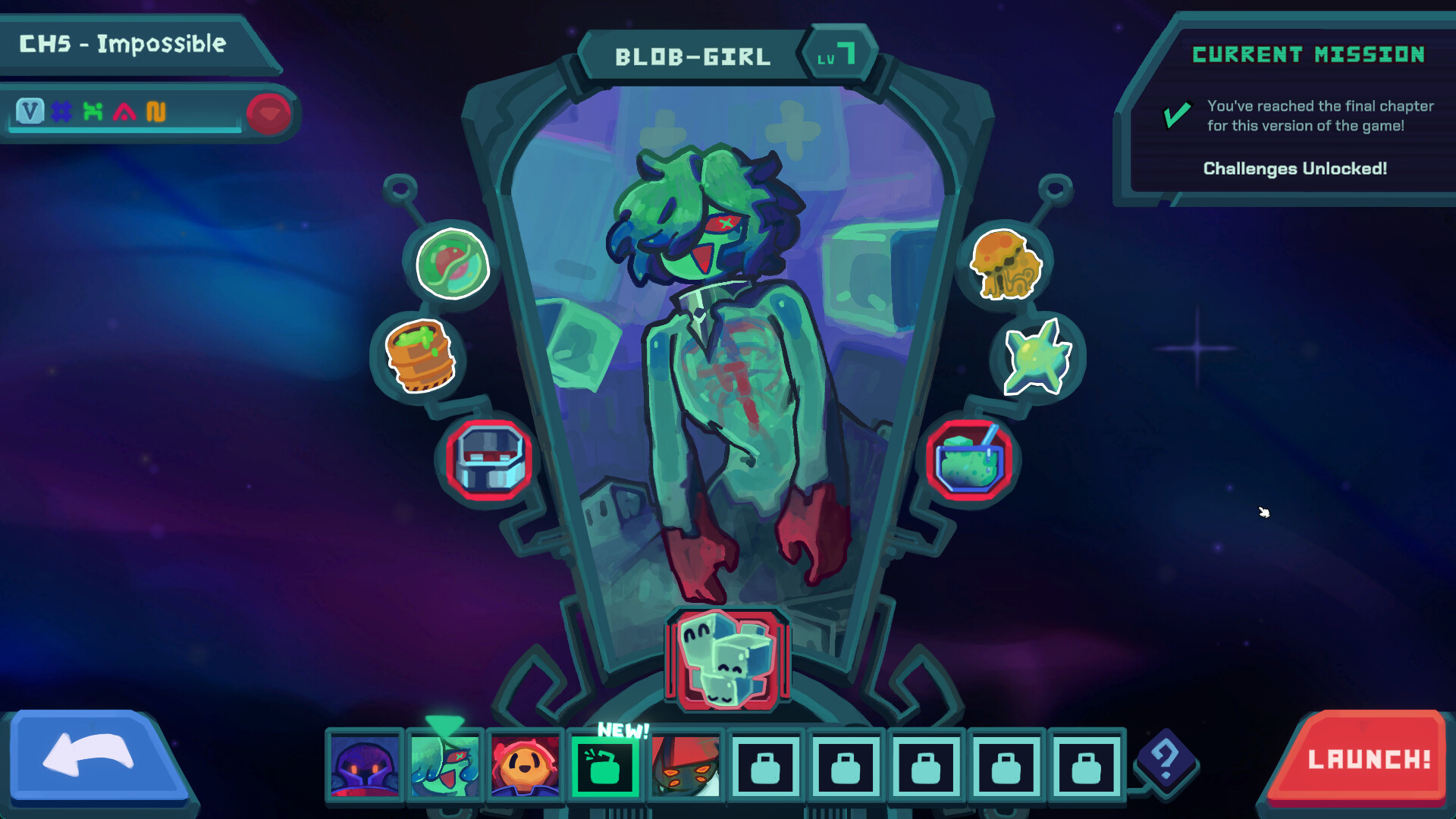
Blob Girl is the clearest starting example. Her announced starter perk supplies three Mini-Dice each turn and gives a column's artifact two XP when a Mini-Die scores there. The army starts with a way to produce scores and grow artifacts. That makes an early payoff a sensible direction, and also lets a partial engine contribute while you search for additional pieces.
This is a flexible build route based on her official kit, with limited community examples for unit interactions. It is not a guaranteed loop, seeded walkthrough or tested win-rate claim. Charge, random recipients and the encounter rule can limit the chain. Watch the launch and the current tooltips before paying to extend an interaction.
Spiky Gel supplies permanent growth
Spiky Gel's announced ordinary effect gives a random unit five STR when you receive a Mini-Die. Blob Girl supplies a recurring starting event for that payoff. Increasing Mini-Dice income can therefore improve both current scoring and the retained army, instead of only adding another roll to the current turn.
The random recipient matters. Ask whether the units available to receive the strength are useful. Another low-value body can compete for a random benefit even if it adds a little immediate attack. Do not automatically empty the army either: a build that rewards spawns, deaths or a populated grid can use those units. Choose recipients according to the actual engine you are building.
Level the artifact when the next improvement will be triggered repeatedly and you intend to keep the associated army. More XP on a payoff is less attractive when the next fight wipes all the recipients or the artifact is about to be replaced. In a wipe challenge, prioritize the ability to grow the replacement army quickly; that is a different goal from protecting today's strongest unit.
Acid Town reaches across columns
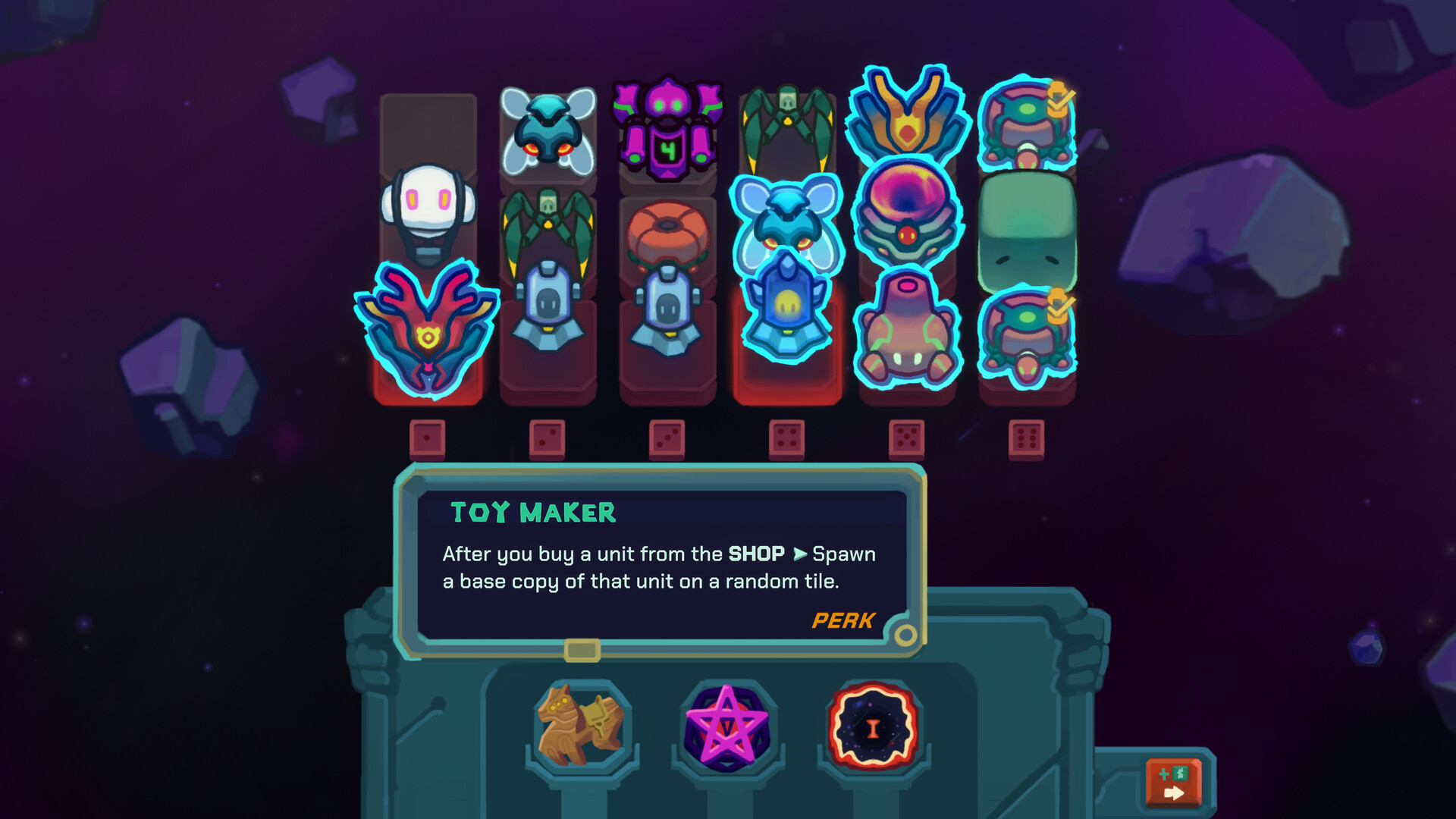
Acid Town responds to a Mini-Dice score in its column by scoring a random unit in another column. This offers access to a useful unit that the original die did not select. Position the artifact so that the other-column target pool contains units you would actually like to score again. A cross-column activation is only as helpful as its possible recipients.
The event also explains why the board needs deliberate placement. A desired recipient in Acid Town's own column is outside the described other-column selection. Separate the effect from its intended targets, and then make the effect's column reachable by Mini-Dice. If the chain misses the valuable unit, review the eligible pool before concluding that the artifact needs another level.
In practical terms, start with the independent value of each piece. Gel can improve units without Acid Town. Acid Town can access another useful score without a specific generator. You can then connect them when the right unit appears. This reduces the cost of waiting for an ideal offer and gives the army a way to keep progressing through imperfect shops.
Broodmother and Repeat: check the resource boundary
The community walkthrough describes Broodmother as spending Charge to create Mini-Dice according to Dice Power. It also explains that Repeat applies the scoring line after the cost separator, rather than repeatedly paying the same Charge cost. Treat these as unit-specific examples to check in the current tooltip, particularly on a variant.
A setup can still fail when the unit starts without Charge. Repeat does not replace the need for the initial activation. Before buying a second payoff, watch whether the generator activates on the next turn and whether its Charge supply recovers. If the apparent loop worked only once, solve that supply problem instead of assuming another Repeat bonus will repair it.
This is a general principle for the build: distinguish a cost that enables an activation from an effect that produces more activations. A chain can extend a productive score, but it cannot automatically erase every prerequisite. Choose upgrades that improve the part which is currently limiting the chain, and keep an ordinary scoring route available while repairing it.
Blob Cutter is a board commitment
Blob Cutter adds one Mini-Dice power but restricts those dice to faces one, two and three. The official perk changes both strength and reach. If the key artifacts and generators sit in columns four through six, stronger Mini-Dice do not directly activate them. A drop after taking the perk can be a coverage problem rather than evidence that the original build was weak.
Move the core Mini-Dice effects into the reachable half when the shops allow it. Keep Acid Town there while leaving useful other-column recipients outside its column. Base Dice still provide a separate route into the rest of the board; the Mini-Dice restriction is not a universal removal of those columns. Read every affected effect separately before deciding which pieces need movement.
Before accepting the perk, price the transition. Can the present board already use it? Do you have enough cash or a visible movement offer to relocate a key artifact? Is the next encounter too close to wait? If the answer is no, the extra power may be a poor immediate trade. A strong upgrade can be wrong for the moment you are offered it.
Add Mult without losing the starting chain
Slusho Max gives a Mult payoff after Base Dice tied to the Mini-Dice you have. Other shops can provide different routes into Mult. The important question is whether the new effect activates alongside your existing generator and growth. Avoid replacing a reliable source of dice with an impressive multiplier that leaves no way to start the scores it intends to amplify.
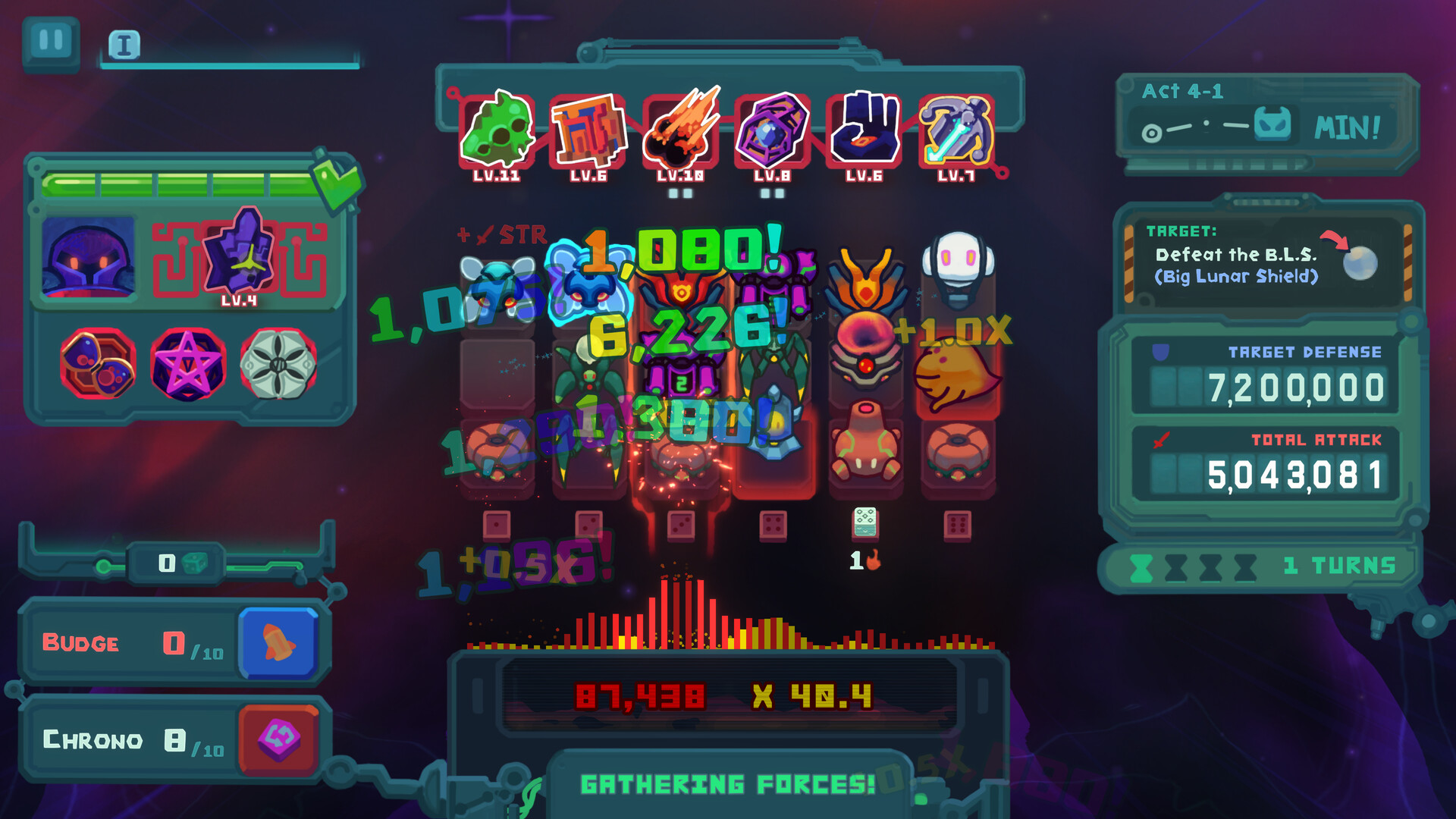
Compare the layers of attack. If valuable units activate often but remain weak, growth helps. If retained strength is healthy but the final attack stays small, renewable Mult helps. If the numbers are promising whenever a generator activates but it frequently misses, improve access. These diagnoses lead to different purchases even though each failure ends with the same symptom of an insufficient final score.
Do not rely on a rare finishing piece as the only solution. A partial engine that grows each turn and can be aimed at useful columns can continue working while you take available Mult and strength upgrades. The developer's advice for hard fights emphasizes adapting to offers; that applies here as much as it does in Chapter 6.
Troubleshoot the launch before replacing the engine
| Symptom | First thing to inspect | Useful next change |
|---|---|---|
| Plenty of dice, little retained strength | Whether there is a payoff for receiving or scoring them | Add or level a frequently used growth effect |
| Strong units, few useful scores | Whether the generators and targets are reachable | Improve placement and a reliable starting activation |
| Scores fell after Blob Cutter | Key pieces in columns 4–6 | Move the Mini-Dice engine into 1–3 |
| A generator worked once and stopped | Its current Charge and activation condition | Replenish the prerequisite before adding more Repeat |
| Many weak random activations | The eligible other-column recipients | Keep the target pool aligned with the desired chain |
| Good early turns, late damage wall | Renewable Mult and scaling quality | Pivot from small flat gains to a stronger available payoff |
Make one correction and watch the next launch. A new random outcome can make a single test noisy, so compare the event that changed rather than only the final score. Did the moved artifact now receive Mini-Dice? Did the charged unit start the chain? Those observations tell you whether the purchase did its job and what the next shop needs to supply.